
Home › Domestic Services Old › Portable Appliance Testing
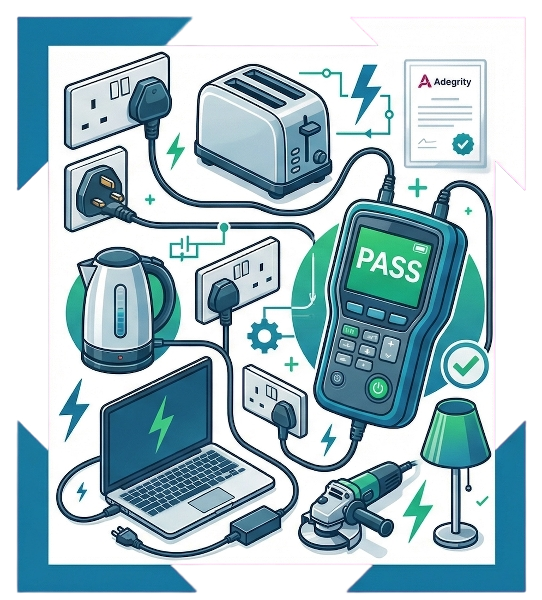

Private landlords have a legal responsibility to keep their tenants safe, and PAT testing is one of the most effective ways to do this. Portable Appliance Testing is a routine check of your electrical appliances to make sure they are safe to use, and it helps you meet your obligations under the Housing (Scotland) Act 2006 and Health and Safety at Work regulations.
Hazards caused by faulty electrical appliances can be extremely dangerous and even life-threatening, but the good news is that they are entirely preventable.
PAT testing ensures your electrical equipment is safe by checking for any signs of damage or malfunction. Any portable appliances, including fridges, ovens, cookers and washing machines, should be included in the inspection.
Faulty electrical appliances can cause fires, electric shocks, and serious injuries. Regular PAT testing is your best defense against these preventable hazards.
Our qualified assessors will:
Details your portable appliance register listing all items tested, their location and results
Evidence of compliance for your records, letting agents or insurers
Confidence that your tenants are protected and your legal duties are covered
At Adegrity, best practice for domestic properties is an annual check. This ensures your tenants remain safe and you stay compliant with regulations and insurance requirements.
Portable Appliance Testing is a safety check carried out on electrical equipment to ensure it is safe to use.
It involves a visual check examination and an electrical test by a qualified and competent person.
While the Electricity at Work regulations 1989 require that electrical equipment be maintained in a safe condition, they do not specify that a PAT must be done or how frequently. However, by carrying out a PAT, it helps you demonstrate compliance with these regulations and helps keep everyone involved in your property safe and protected.
Any electrical appliance that can be moved and plugged into an electrical outlet should be tested. This includes items like kettles, cookers, fridges, computers, lamps etc.
Only qualified people can perform PAT testing. They must have the neccessary skills, qualifications and experience to carry out inspection and testing.
The certificate includes the appliance description, location, test engineers name, test carried out and results obtained.
The frequency of testing depends on several factors: who’s using the equipment and how often, the environment in which it’s being used, the type of equipment it is, if it’s a requirement from your insurance provider and your own risk assessment. At Adegrity, we recommend annual testing, especially for property management services.
Ensure that all appliances are accessible and provide any relevant documentation, such as previous PAT records. We require access to the plug, therefore items such as fridges will need to be moved to allow access to the plug. It’s also helpful to label appliances with their last test date.
Yes – some councils will require a copy for landlord licensing/compliance, as will some insurance providers.
Best practice is to maintain a log for monitoring and maintenance purposes as well as demonstrating compliance.
If an apppliance fails, it should not be used until it has been repaired or replaced.
If you change address, you will need to get a new PAT Certificate as your current one will be invalid with the incorrect address. You will need to arrange for a new inspection to be carried out of your equipment, in case anything has been damaged in transit too.